







The Double-Edged Armor: How Cooling Vests Are Resolving Life-Threatening Heat Stress in CBRN Suits
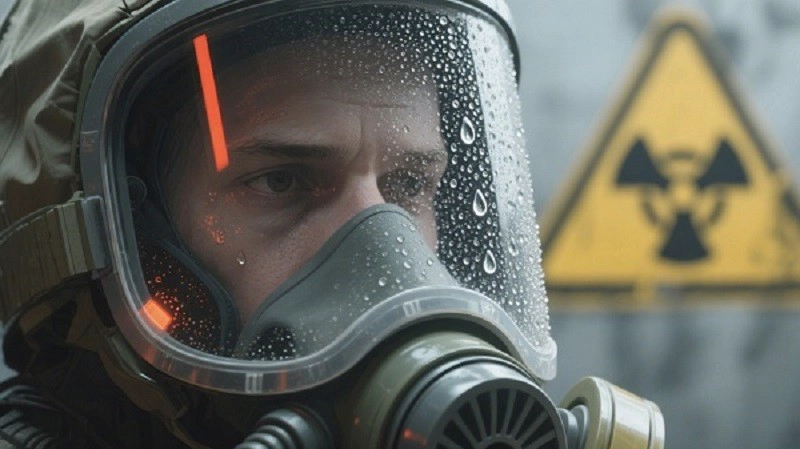
Within the sealed world of Nuclear, Biological, and Chemical (NBC) protective suits, the very armor designed to save lives becomes a sweltering prison. When chemical reconnaissance soldiers battle blurred vision in 50°C sauna-like conditions, or explosive ordnance disposal technicians endure heat-induced hand tremors, the lethal threats sealed outside are silently replaced by a rising internal core temperature—until cooling vests shatter this deadly thermal paradox, reconciling survival with mission success.
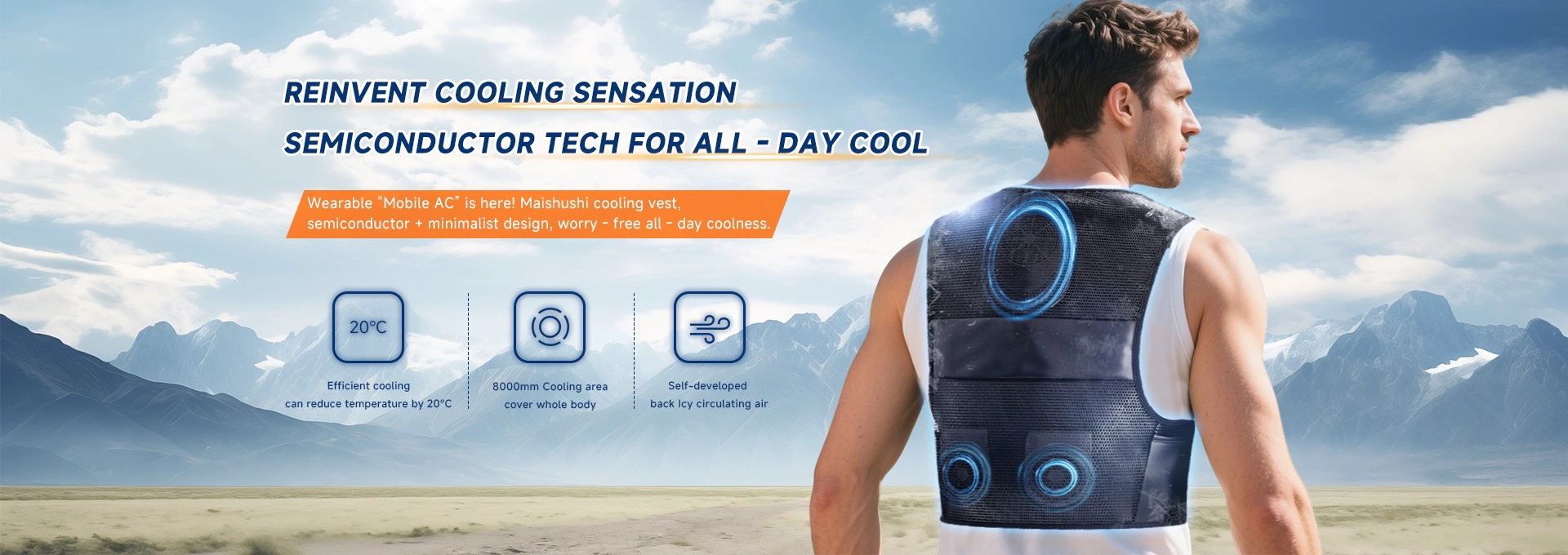
OEM foldable cooling vest factory China
The Second Skin on Deadly Grounds
Chemical, Biological, Radiological, and Nuclear (CBRN) protective suits serve as a critical barrier against chemical agents, pathogens, radioactive dust, and nuclear hazards. Whether worn by battlefield scouts, nuclear emergency responders, or high-containment lab personnel, this "second skin" blocks external threats at a heavy cost: it severely impedes the body’s natural heat dissipation.
The Silent Killer: How Heat Stress Compromises Body and Mind
Within 30 minutes of donning protective gear, symptoms emerge—blurred vision, pounding heartbeat, and trembling hands. These signal more than discomfort; they mark the onset of acute heat stress. Joint research by Anhui Jianzhu University and Tsinghua Hefei Institute for Public Safety revealed that in 45°C environments, shoulder temperatures beneath suits rise by 0.5°C per minute.
The Physiological Breakdown Chain:
Dehydration: Up to 1.5L of sweat loss/hour, reducing blood volume.
Cardiovascular Overload: Heart rate surges 30-50 bpm, diminishing cardiac efficiency.
Core Temperature Dysregulation: Cognitive decline begins at 38°C; multi-organ failure risks emerge at 39°C.
The cognitive toll is equally critical. (Best price industrial cooling uniform for sale)A 2020 Naval Medical University study confirmed that at 35°C ambient temperature, unprotected suit users experienced 40% more operational errors and 0.8-second slower reaction times—a delay potentially catastrophic during biological device disarmament.
"Cognitive function at 38°C inside a suit equals impairment at 0.08% blood alcohol concentration."
— National Key Laboratory of NBC Protection for Civilian
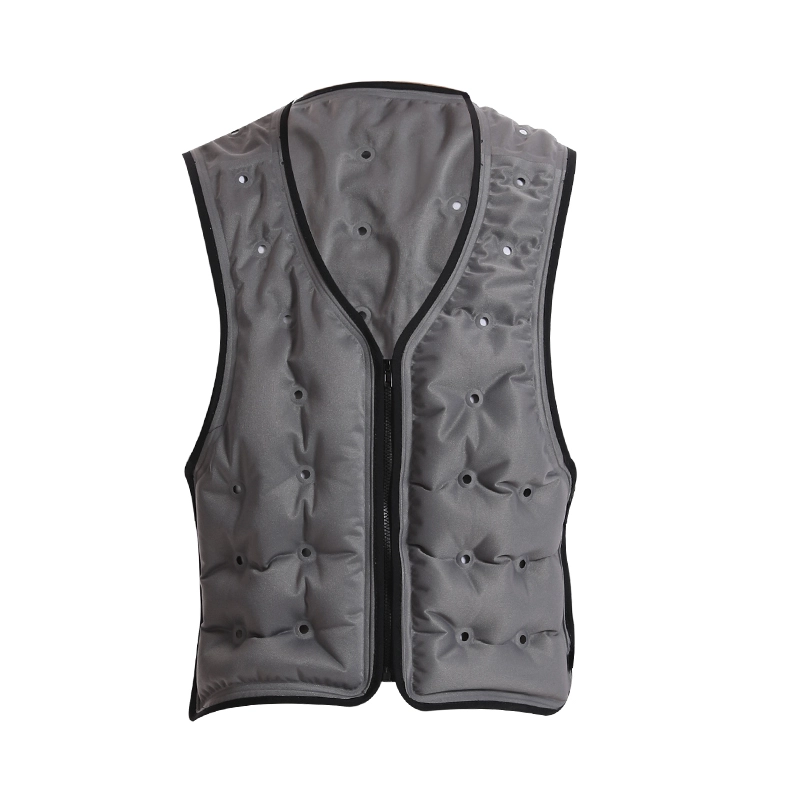
Wilcoxon test data underscores the solution’s impact: cooling vests slash physiological strain index from 4.038 to 1.42, reduce reaction time from 0.769s to 0.539s, and significantly lower error rates (p<0.05). These sub-1kg systems redefine survival thresholds.
Field Validation: How Cooling Tech Transforms Operations
When heat stress indices breach physiological limits, three technologies are breaching the thermal prison:
Phase Change Materials (PCMs): Silent heat absorption.
Liquid Cooling Garments: Precision temperature control.
Aerospace-Derived Systems: Cross-industry innovation.
From nuclear decontamination zones to desert operations, the revolution is underway:
| Technology | Key Features | Performance |
Dräger PCM Vest (CVP 5220)Wearable under hazmat suits; no pre-chilling required; passive cooling | 4 hrs of continuous cooling.
U.S. Army PTMS Liquid circulation + external micro-cooler; integrated with Level A CBRN suits | Maintains 22°C (72°F) for 4 hrs.
Wholesale cooling vest for construction workers bulk order
The New Calculus of Survival
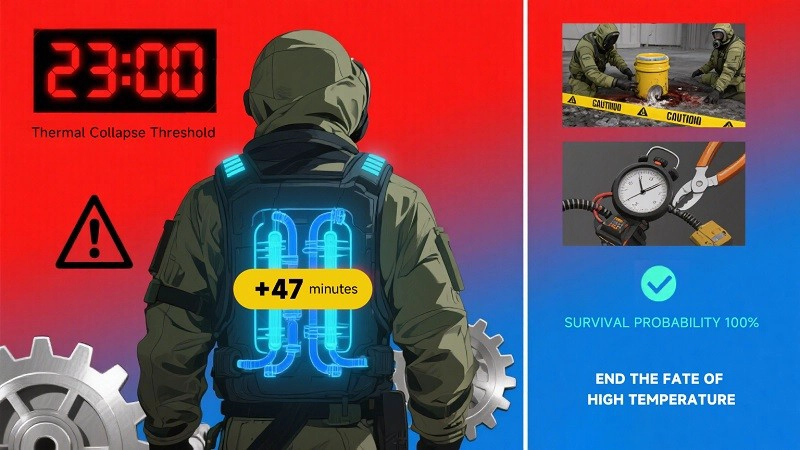
In CBRN operations, time isn’t measured in minutes—but in degrees of rising core temperature. Cooling vests extend the 23-minute heat collapse threshold to a 70-minute tactical window. Those 47 extra minutes enable a squad to seal a contamination source, allow a technician to defuse a device, and transform survival from chance into certainty. As “cold power” becomes standard gear, the era of racing against heat meets its end.