












The Travel Diary of Heat: Unveiling the Three Modes of Heat Transfer
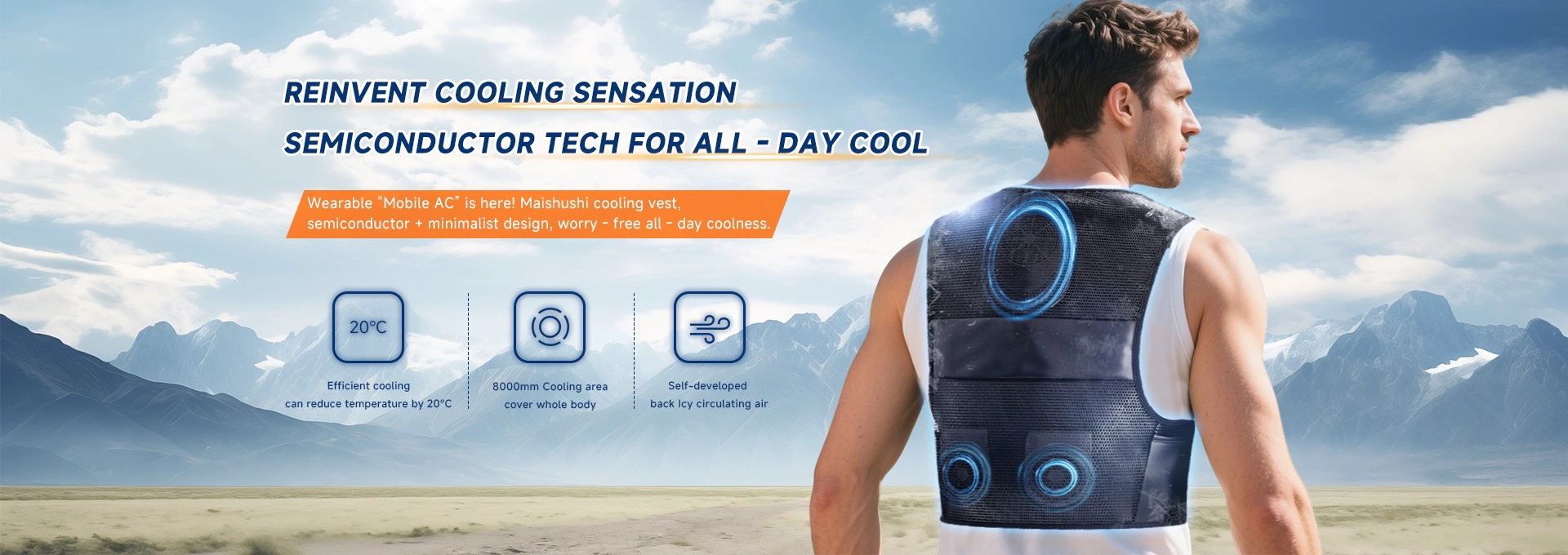
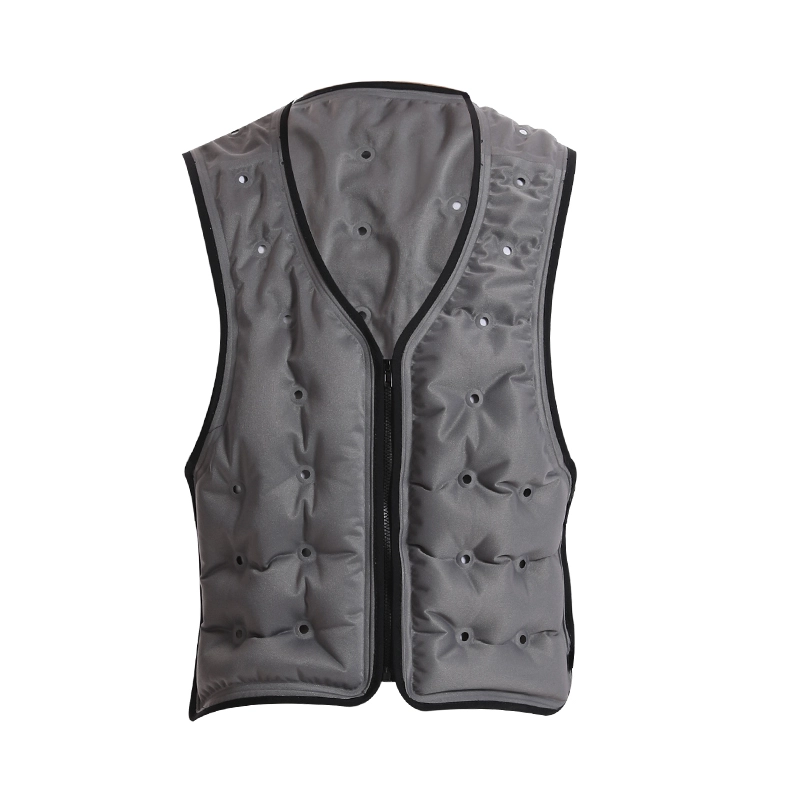
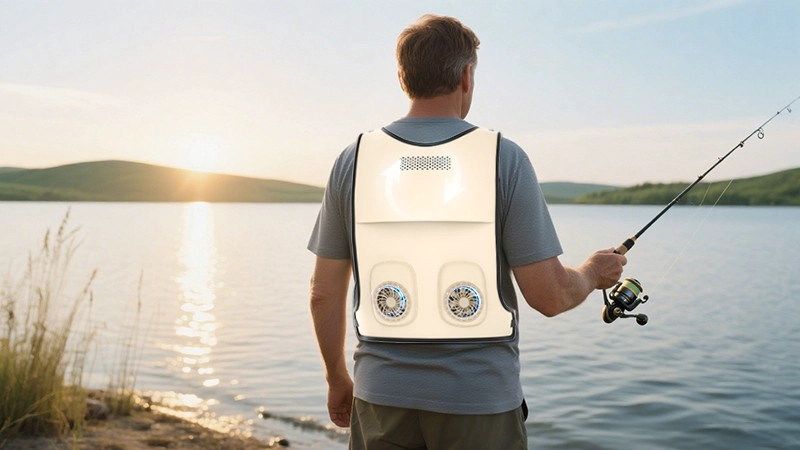
Heat transfer occurs through three fundamental mechanisms: conduction, convection, and radiation. Take a cooling vest as an example: these three modes work together to efficiently dissipate heat. Conduction rapidly transfers heat from the skin to the cooling medium (like phase-change materials or coolant tubes). Convection drives heat exchange between the cooling medium and flowing air (or liquid). Radiation governs long-wave radiative heat transfer between the vest's surface and its surroundings.
It’s the integrated control of these three mechanisms that enables cooling vests to effectively regulate body temperature.
China cooling hiking clothes manufacturer
Conduction: The Solid’s Whisper
Conduction is heat transfer within an object or between directly touching objects, occurring through microscopic movements of molecules, atoms, or free electrons. Imagine a row of children whispering a secret—heat transfers "quietly" from hotter regions to cooler ones.
Key Features: Primarily occurs in solids; happens in liquids/gases but is often accompanied by convection; no bulk material movement.
Thermal Conductivity Varies Widely: Metals are good conductors (silver > copper > aluminum); wood, plastic, and air are poor conductors.
Governing Law: Fourier's Law: q = -k (dT/dx), where q is heat flux density, k is thermal conductivity, and dT/dx is the temperature gradient.
Convection: The Fluid’s Dance
Convection transfers heat via the bulk movement of fluids (liquids or gases). Picture a lively dance—fluid particles carry thermal energy as they "dance" from one location to another.
Key Features: Only occurs in fluids (gases/liquids); classified as natural convection (driven by density differences) or forced convection (driven by external forces like pumps/fans).
Governing Law: Newton's Law of Cooling: Q = h A (Ts - Tf), where h is the convective heat transfer coefficient, A is surface area, Ts is surface temperature, and Tf is fluid temperature.
Efficiency Factors: Depends on fluid properties, flow velocity, surface geometry, etc.
Radiation: The "Thermal Courier" Across Space
Thermal radiation transfers energy through electromagnetic waves (primarily infrared). It requires no medium, like a courier delivering a "heat package" even through a vacuum.
Key Features: The only mode that works in a vacuum; all objects above absolute zero (-273°C / 0 K) emit thermal radiation; heat transfer depends strongly on surface properties (emissivity, ϵ).
Governing Law: Stefan-Boltzmann Law: Q = σ ϵ A T⁴, where σ is the Stefan-Boltzmann constant, ϵ is emissivity, A is surface area, and T is absolute temperature.

Wholesale price cooling hiking clothes supplier
Comparing the Three Siblings of Heat Transfer
To clearly understand conduction, convection, and radiation, imagine them as three siblings with distinct personalities:
Medium Required:
Conduction (The Steady Elder Sibling): Relies on solids or stationary fluids. Heat passes like a baton in a relay race through connected matter.
Convection (The Active Middle Sibling): Requires flowing fluids. Heat moves with the fluid's motion, akin to a group dance.
Radiation (The Independent Youngest Sibling): Needs no medium. It travels freely through vacuum, like a lone traveler crossing vast emptiness.
Speed of Propagation:
Conduction: Relatively slow, dependent on material conductivity – a steady walker.
Convection: Faster, propelled by fluid flow – a swift runner.
Radiation: Extremely fast (speed of light), but energy density is often lower – like rays of light spreading rapidly but diffusely.
Temperature Dependence:
Conduction: Directly proportional to temperature gradient (dT/dx). Steeper gradient = faster transfer.
Convection: Depends on temperature difference (Ts - Tf) and flow intensity. Larger difference/stronger flow = higher efficiency.
Radiation: Proportional to the fourth power of absolute temperature (T⁴). Small temperature changes cause large shifts in radiative energy.

Fast delivery air conditioned vest wholesale
The Synergistic Symphony of Heat Transfer
These three "siblings," though distinct, work in concert. Rarely acting alone, they perform a synergistic symphony of heat transfer in nature and technology. Understanding and applying them is crucial everywhere: from cooling electronics and spacecraft thermal control, to building insulation and smart wearables like cooling vests.
Mastering their "personalities" and collaborative principles not only reveals the science behind everyday phenomena but also inspires the design of more efficient, sustainable energy solutions. This allows the ever-present force of "heat" to better serve human well-being. So, next time you feel sunlight, a cool breeze, or use an insulated cup, think of the busy "Heat Transfer Trio" at work—you might just become adept at mastering the principles of thermal energy!